

: +8618979570760 :xuran1603@gmail.com WhatsApp:+8619170756831
English

Views: 0 Author: Site Editor Publish Time: 2026-08-04 Origin: Site


Selecting the wrong material for your piping system causes massive headaches. It can trigger premature system failures. It might even cause catastrophic pressure blowouts. Such errors also lead to unnecessary budget bloat across complex projects. Engineers and procurement teams face a core dilemma daily. You must balance the immediate upfront savings of carbon steel against long-term reliability. Stainless steel offers incredible corrosion resistance and lasting durability. However, it requires a larger initial investment. Resolving this challenge demands careful analysis. You need accurate data about your specific operational environment. This guide provides an evidence-based framework to help you choose. You will learn how to evaluate, specify, and source the correct pipe flange. We cover complex operational environments and strict compliance standards. Read on to master these critical material differences.
Carbon steel provides exceptional tensile strength and high-temperature tolerance at a lower initial cost, making it the standard for heavy industrial, non-corrosive environments.
Stainless steel delivers superior resistance to oxidation and chemical corrosion, essential for high-purity, cryogenic, or highly caustic applications.
Mating dissimilar metals (carbon to stainless) requires specific mitigation strategies, such as isolation kits, to prevent rapid galvanic corrosion.
Engineers must establish fundamental metallurgical differences first. These basic properties dictate overall performance. They determine how joints behave under extreme stress. We rely on distinct chemical compositions for specific jobs. You cannot substitute one for another blindly. Let us examine the standard grades used globally.
These components feature high iron content. They contain elevated carbon levels. They lack the protective chromium layer found elsewhere. This distinct composition provides several unique mechanical advantages.
Strengths: You gain incredible yield strength immediately. They offer excellent machinability during fabrication. Engineers prefer them for demanding environments. They deliver superior performance in high-heat piping systems. They easily withstand massive high-pressure loads. Heavy industrial facilities rely on them daily.
Vulnerabilities: The lack of chromium creates serious vulnerabilities. They remain highly susceptible to rapid rust. Oxidation destroys unprotected surfaces quickly. You must treat or coat the exterior constantly. Furthermore, they perform poorly in cryogenic conditions. The metal becomes dangerously brittle below freezing. You can specify low-temperature grades. The A350 LF2 grade handles colder environments safely. Otherwise, avoid sub-zero applications entirely.
These alloys contain a minimum of 10.5% chromium. This addition changes the metallurgy completely. The chromium creates a microscopic passive oxide layer. This invisible shield blocks rust automatically. It self-heals when scratched or physically damaged.
Strengths: You achieve broad chemical resistance immediately. They handle aggressive acidic fluids easily. They offer extreme temperature versatility constantly. They maintain toughness in deep cryogenic applications. They retain strength at highly elevated temperatures. Facilities demanding strict hygiene love them. You can polish them to sanitary finishes quickly. Food and medical industries require these exact properties.
Vulnerabilities: They demand a significantly higher raw material cost. They also face unique chemical threats. Specific high-temperature saline environments pose huge risks. The metal becomes susceptible to chloride stress corrosion cracking. Chlorides attack the grain boundaries mercilessly. The metal fractures without any visual warning. You must monitor chloride concentrations constantly.
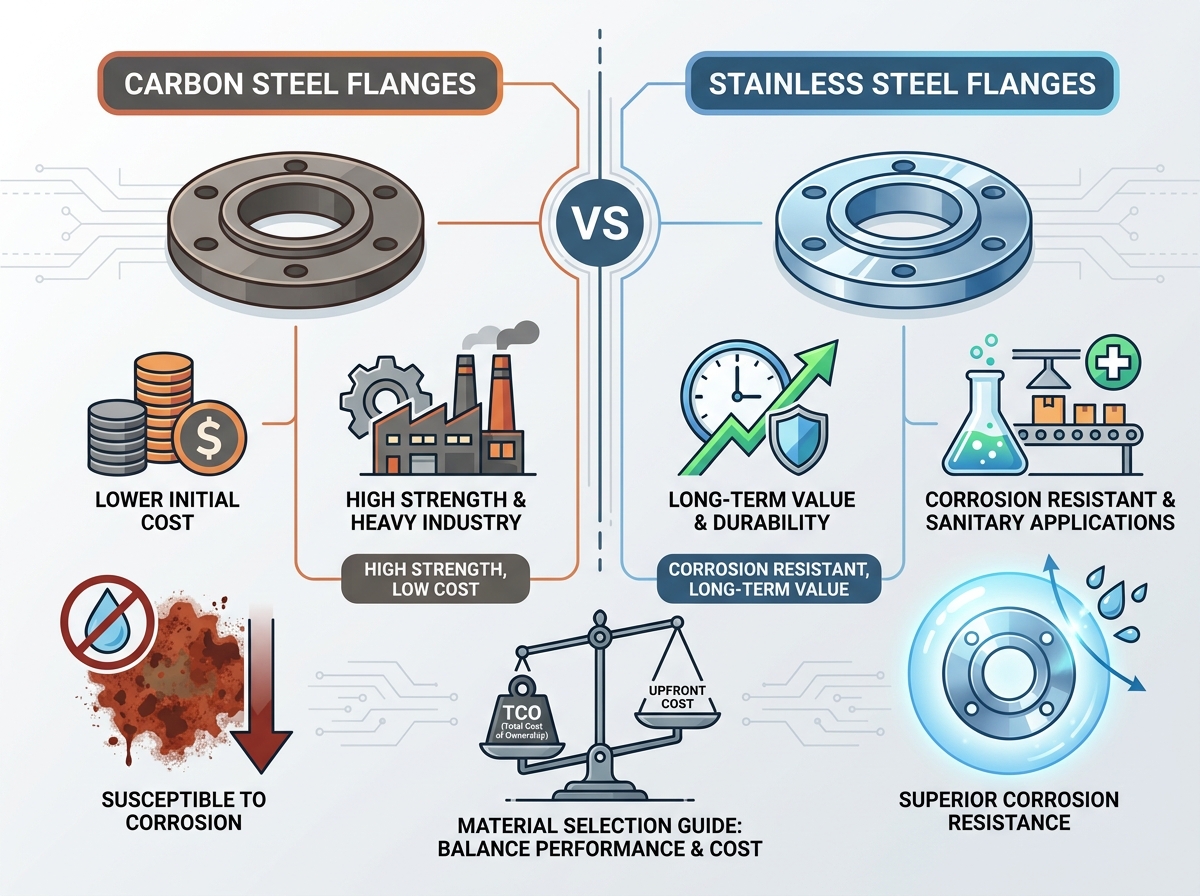
You need a clear decision framework. Rely entirely on measurable operational realities. Avoid making decisions based on generic material claims. We must evaluate every physical variable carefully.
Evaluate the transported fluid carefully. Analyze its exact chemical composition. Check the pH levels daily. Measure the chloride concentration accurately. These internal factors dictate your baseline choice. Highly acidic liquids destroy standard alloys rapidly. Strong alkaline solutions also cause unpredictable degradation.
Assess external environmental factors rigorously. Offshore marine environments blast metal using salty spray. Subterranean moisture creates highly corrosive soil conditions. Outdoor weather exposure introduces constant UV and moisture cycles. These external threats ruin unprotected joints quickly. You must consider both internal and external threats equally. We recommend specifying superior grades for offshore marine platforms. Subterranean installations often require robust cathodic protection alongside proper alloys.
Define your exact operating limits early. Material structural integrity changes drastically across temperature scales. Carbon variants maintain integrity at extreme heat. They endure heavy thermal cycling remarkably well. However, they become brittle at cryogenic temperatures. Cold environments cause microscopic cracks to propagate instantly.
Note how pressure class ratings interact over time. Standard ratings dictate physical dimensions and capabilities. A Class 150 joint handles specific loads. A Class 900 joint features much thicker walls. Material yield strength fluctuates under sustained physical stress. High temperatures reduce pressure containment capabilities significantly. A system holding 300 psi at room temperature changes under heat. The same system might fail at 600°F. Always reference ASME B16.5 tables explicitly. They map exact degradation curves for various grades. Following these tables prevents catastrophic system blowouts.
Align your material choices standard industry compliance requirements. This strict alignment de-risks the procurement process completely. You avoid costly regulatory fines easily. We must match the alloy to the industry properly.
Heavy industries rely on these robust components heavily. Ideal use cases include massive oil and gas refineries. Power generation plants use them across steam lines. HVAC systems utilize them for large chiller connections. Municipalities use them for non-potable water transmission.
Compliance notes require careful attention. Focus heavily on API standards. Follow ASME codes for high-pressure hydrocarbon transport. Refineries face intense scrutiny regarding pressure boundaries. Strict adherence ensures safe containment of volatile chemicals. You must provide certified material test reports always.
Hygienic and highly corrosive environments demand these advanced alloys. Ideal use cases include large food and beverage processing facilities. Pharmaceutical manufacturers require absolute molecular purity. Chemical manufacturing plants process highly caustic fluids daily. Marine applications face relentless saltwater exposure constantly.
Compliance notes differ significantly here. Focus primarily on FDA approvals. Follow strict 3-A Sanitary Standards for dairy operations. Adhere to ASME bioprocessing equipment (BPE) guidelines strictly. These guidelines dictate exact surface finish requirements. They ensure bacteria cannot hide in microscopic crevices. Regulatory bodies mandate these specific grades for human safety.
Here is a detailed comparison summarizing material applications and compliance standards.
Material Type | Primary Industries | Key Environments | Governing Standards |
|---|---|---|---|
Carbon Steel | Oil & Gas, Power Generation, HVAC | High-pressure, non-corrosive, extreme heat | API, ASME B31.3 |
Stainless Steel | Pharmaceuticals, Food & Beverage, Marine | Highly corrosive, cryogenic, high-purity | FDA, 3-A Sanitary, ASME BPE |
Address critical high-risk engineering scenarios directly. Systems often intersect unexpectedly. Joining dissimilar metals creates dangerous chemical reactions. You must manage these connection points carefully.
The Galvanic Corrosion Threat: An electrochemical reaction accelerates degradation severely. This happens when mating dissimilar metals directly. The reaction requires an electrolyte like standing water. Carbon acts as the active anode. It corrodes rapidly while protecting the stainless metal. The noble metal remains perfectly intact. Meanwhile, the standard metal dissolves completely. This rapid corrosion compromises the joint integrity fast. A blowout becomes inevitable without proper intervention.
Engineering Solutions & Isolation: You must implement specific mitigation strategies immediately. Detail the strict requirement for dielectric isolation kits. These kits safely bridge the two materials. They prevent direct electrical conductivity entirely. They do not compromise the mechanical joint integrity.
You insert special insulating gaskets between the faces. You slide insulating bolt sleeves over the fasteners. You place non-metallic washers under every metal nut. This creates complete electrical separation. The galvanic circuit breaks instantly. We heavily rely on these kits in complex facilities.
Torque and Gasket Selection: Note the immense importance of correct gasket selection. The right gasket material accommodates thermal expansion differences. Spiral wound gaskets handle extreme pressures beautifully. Pure PTFE gaskets resist aggressive chemical attacks perfectly. The two metal alloys expand at different rates. Stainless expands significantly more under heat. This differential expansion creates massive shear forces. Proper torque application maintains the seal during thermal cycling. You must follow specific torquing sequences carefully. Use calibrated tools to prevent uneven mechanical stress.
Provide actionable quality assurance steps for field crews. Site inspectors need simple verification tools. Installation crews must prevent costly mix-ups. A wrong installation leads to disastrous system failures. Here are the crucial steps for on-site verification:
Inspect the physical component visually for stamped heat numbers.
Verify ASTM specification stamps directly on the exterior rim.
Test the magnetic response using a simple pocket magnet.
Perform controlled spark testing procedures in a safe zone.
Visual and Stamping Checks: How do you read these important markings? Manufacturers stamp essential data directly on the exterior rim. You will find the exact heat number there. This number traces back to the original steel melt. You will also see the ASTM specification stamp. It confirms the exact chemical composition grade. Inspectors must cross-reference these markings against the delivery paperwork. Reject any component lacking clear, legible stamps.
Physical Testing: Quick on-site verification methods save enormous time. Check the magnetic response of the unknown metal. High-iron alloys are highly magnetic. Standard austenitic grades are generally non-magnetic. A simple magnet reveals the difference instantly. You can also analyze spark testing profiles safely. Use a grinder to generate small sparks. Carbon alloys produce long, bright spark streams. Austenitic alloys yield shorter, reddish sparks. Use these physical tests to confirm documentation accuracy.
Summarize your shortlisting logic clearly. Choose carbon alloys for standard, non-corrosive high-pressure applications. They optimize project budgets efficiently. They provide exceptional mechanical strength for massive infrastructure. Default to stainless alloys for demanding conditions. Specify them when absolute purity is non-negotiable. Select them when chemical resistance is critical. Extreme longevity requires a stable passive oxide layer.
Encourage your engineers to seek expert guidance constantly. Consult specialized metallurgists before finalizing massive orders. Submit your specific system parameters early. Include your exact pressure, temperature, and fluid type data. Request a definitive, compliance-checked quote from your supplier. Secure your systems using a highly reliable flange today. Accurate selection guarantees long-term operational success.
A: Yes, you can weld these dissimilar materials together. It requires specific filler metals like 309L. This filler accommodates the differing metallurgical properties. You must manage galvanic corrosion risks carefully. Thermal expansion rates differ significantly between the metals. Proper welding procedures minimize dangerous stress cracking. Always consult certified welding codes before starting.
A: The 316 grade contains added molybdenum. This crucial element significantly enhances overall corrosion resistance. Saltwater environments contain highly aggressive chlorides. These chlorides cause rapid microscopic pitting in standard metals. Molybdenum prevents this chloride-induced pitting effectively. Therefore, 316 outlasts 304 dramatically in harsh marine conditions.
A: No, protective coatings only provide temporary surface defense. High-quality epoxy or galvanization extends the component lifespan. However, these surface treatments eventually chip or scratch. They degrade under heavy mechanical stress. Once compromised, the underlying active metal rusts rapidly. Coatings cannot substitute for solid alloyed metal in corrosive fluid applications.
A: Both materials are available in standard ASME B16.5 pressure classes. You will find Class 150 through Class 2500 options readily. However, their specific pressure-temperature rating curves differ. Standard iron alloys often retain structural strength better at extremely high temperatures. Always check the official ASME tables for your chosen grade.