

: +8618979570760 :xuran1603@gmail.com WhatsApp:+8619170756831
English

 |


| Quantity: | |
|---|---|
BL Flange
SDFL
This GB standard blind flange is a solid forged pipe end closure fitting, designed for pipeline isolation, maintenance shutdown, and pressure testing across industrial applications. Produced primarily from carbon steel grades, it delivers stable mechanical performance for general industrial piping systems. Manufacturing follows a quality management system certified to ISO 9001, ISO 14001, and ISO 45001, with CE and TS certifications available to meet commercial procurement compliance requirements. The product supports multiple global standards alongside GB specifications, adapting to diverse project requirements.
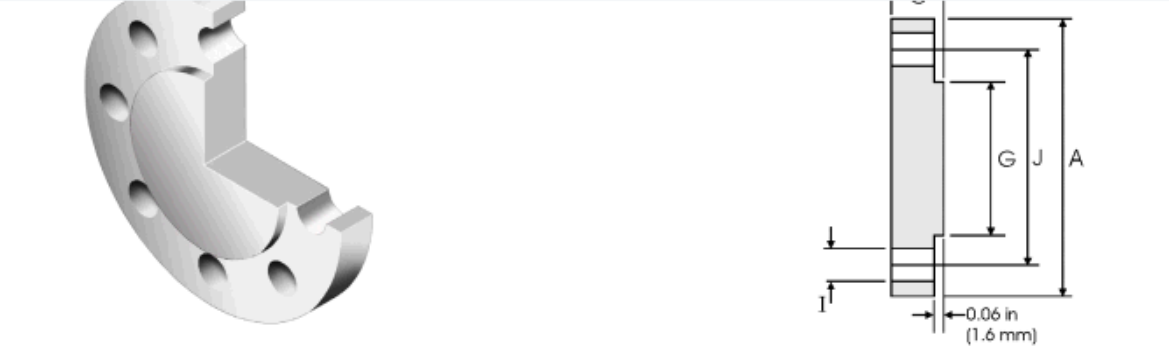
Nominal Size | Outer Diameter | Central circle diameter | Bolt Hole Diameter | Number of Bolt Holes | Flange Ring Height | Sealing Face Diameter | Sealing Face Height | |
|---|---|---|---|---|---|---|---|---|
DN | NPS | A | J | I | G | |||
15 | 1/2 | 95.2 | 66.5 | 15.7 | 4 | 14.2 | 35.1 | 1.6 |
20 | 3/4 | 117.3 | 82.6 | 19 | 4 | 15.7 | 42.9 | 1.6 |
25 | 1 | 123.9 | 88.9 | 19 | 4 | 17.5 | 50.8 | 1.6 |
32 | 1-1/4 | 133.3 | 98.6 | 19 | 4 | 19 | 63.5 | 1.6 |
40 | 1-1/2 | 155.4 | 114.3 | 22.3 | 4 | 20.6 | 73.15 | 1.6 |
50 | 2 | 165.1 | 127 | 19.1 | 8 | 22.3 | 91.9 | 1.6 |
65 | 2-1/2 | 190.5 | 149.4 | 22.3 | 8 | 25.4 | 104.6 | 1.6 |
80 | 3 | 209.5 | 168.1 | 22.3 | 8 | 28.4 | 127 | 1.6 |
90 | 3-1/2 | 228.6 | 184.2 | 22.3 | 8 | 30.2 | 139.7 | 1.6 |
100 | 4 | 254 | 200.1 | 22.3 | 8 | 31.7 | 157.2 | 1.6 |
125 | 5 | 279.4 | 234.9 | 22.3 | 8 | 35 | 185.7 | 1.6 |
150 | 6 | 317.5 | 269.7 | 22.3 | 12 | 36.5 | 215.9 | 1.6 |
200 | 8 | 381 | 330.2 | 25.4 | 12 | 41.1 | 269.7 | 1.6 |
250 | 10 | 444.5 | 387.3 | 28.4 | 16 | 47.7 | 323.9 | 1.6 |
300 | 12 | 520.7 | 450.8 | 31.7 | 16 | 50.8 | 381 | 1.6 |
350 | 14 | 584.2 | 514.3 | 31.7 | 20 | 53.8 | 412.8 | 1.6 |
400 | 16 | 647.7 | 571.5 | 35 | 20 | 57.15 | 469.9 | 1.6 |
450 | 18 | 711.2 | 628.6 | 35 | 24 | 60.45 | 533.4 | 1.6 |
500 | 20 | 774.7 | 685.8 | 35 | 24 | 63.5 | 584.2 | 1.6 |
600 | 24 | 914.4 | 812.8 | 41.1 | 24 | 69.85 | 692.2 | 1.6 |
Note: Dimensional data above corresponds to PN16 pressure rating with Raised Face (RF) sealing surface, per GB standard specifications.
Beyond GB/T 9123 standard, production is compatible with ASME B16.5, ASME B16.47, EN 1092-1 Type 05, DIN 2527-2638, ISO 7005-1, JIS B2220, GOST 12836-80, API 6A, API 605, AS 4087, NBR 6111, LR, DNV, MSS SP-44, KS B 1503, and SASO ISO 7005. Custom specifications can be arranged for dedicated commercial procurement projects.
Standard production uses forged carbon steel grades including A105, A350 LF2, S235JR, S275JR, ST37, ST45.8, A42CP, A48CP, E24, A515 GR60, and A515 GR70. These grades deliver stable tensile strength and impact resistance for general industrial and utility piping systems.
For projects with specific corrosion or temperature requirements, custom material options are available, including stainless steel (ASTM A182 F304/F304L, F316/F316L, F51, F53, Alloy 904L), duplex stainless steel, nickel alloy, and Cr-Mo alloy steel. Material traceability documentation is provided for all custom orders.
The integral forging process creates uniform grain structure and consistent mechanical properties across the flange body. Available pressure ratings cover PN0.6 to PN400 and Class 150 to Class 2500, matching the requirements of most industrial piping systems. Common surface treatments for carbon steel flanges include black paint, anti-rust oil, and hot-dip galvanizing to extend service life in atmospheric environments.
Carbon steel blind flanges are widely used across multiple sectors: oil and gas pipeline maintenance and isolation, subsea pipeline systems, LNG terminal infrastructure, wellhead pressure testing, and tank or reactor closure; chemical processing line switching and high-pressure reactor safety isolation; boiler and steam system shutdown in power generation facilities; water tank and network isolation in water treatment and municipal projects; and marine propulsion system maintenance and offshore platform safety isolation.
Before installation, verify that the flange pressure rating matches the pipeline system, and inspect the sealing surface for scratches or foreign impurities. Select gaskets compatible with the sealing face type and process media. For bolt tightening, follow a cross-pattern tightening sequence using a torque wrench, applied in stages to prevent uneven load and potential leakage.
All blind flange installation and removal work must be performed with pipeline pressure at 0, carried out by certified personnel with appropriate personal protective equipment, in compliance with relevant industrial safety standards. For long-term traceability, mark blind flange locations on P&ID diagrams with size, pressure rating, and material information, and maintain installation records for maintenance management.
Standard production covers pressure ratings from PN0.6 to PN400 and Class 150 to Class 2500. Custom pressure ratings can be produced based on project-specific design requirements.
Standard carbon steel flanges are suitable for non-corrosive or mildly corrosive media with appropriate surface treatment. For highly corrosive media such as acidic or high-chloride fluids, stainless steel or alloy steel grades are recommended. Technical support is available for material selection guidance.
Standard surface treatment options include anti-rust oil coating, black paint, and hot-dip galvanizing. Custom coating options can be discussed for specific environmental requirements.
Yes. The flange diameter, thickness, bolt-hole pattern, sealing face and surface treatment can be customized according to the applicable standard or customer drawing. Coating or anti-rust treatment should be selected according to the storage and operating environment.
Yes. Material certificates and inspection reports can be supplied according to the order requirements. The material grade and finished dimensions can be verified before shipment.
Yes. Small-batch and urgent replacement orders are supported, and common specifications may be accepted from one piece. Availability depends on the material grade, size, pressure rating and current production arrangement.
If a confirmed quality issue is caused by manufacturing and the product does not meet the agreed drawing or technical specification, a return, replacement or other corrective solution will be arranged according to the contract.